







Wie man eine gute lokale Reparaturwerkstatt findet
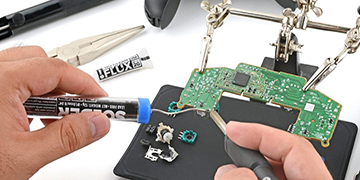
Need help fixing something, but don’t know who to trust?
Finding a good repair shop can save you time, effort, and money—especially when dealing with complex repairs or equipment that is critical to you. However, before searching for a local repair shop, it is best to first confirm whether a repair is actually necessary.
If you enjoy repairing things yourself but would also appreciate guidance from local repair experts, consider attending a community repair event in your area. You can browse our curated list of community repair events. Some excellent organizations that host such events include the Fixit Clinic, Repair Café, and The Restart Project.
However, a DIY approach is not always the best option. Some repairs require specialized tools, experience, soldering skills, calibration equipment, heavy lifting, knowledge of gas or electrical safety, or expertise in data recovery. If the device is expensive, rare, water-damaged, contains important data, or holds sentimental value, it may be wiser to seek professional assistance.
Here is how to find a skilled local repair expert.

Looking for a good local repair shop.
First, identify exactly what needs repairing. Mobile phone repair, appliance repair, auto repair, sewing machine repair, game console repair, and circuit-board-level electronics repair are all distinct specialties. A shop that claims to “fix everything” might be able to handle simple jobs; however, for complex repairs, it is best to seek out a shop that specializes in the specific type of issue you are facing.
Search for reviews, ask friends for recommendations, check local repair groups, and—most importantly—read the negative reviews first. A single negative review might just be noise, but patterns are significant. Look out for complaints regarding unexpected charges, poor communication, recurring malfunctions, missing screws or parts, data loss, or devices sitting idle for weeks without updates.
Call ahead before you go. Ask:
- Have you worked on this specific model or issue before?
- Do you charge a diagnostic fee? Can the diagnostic fee be credited toward the cost of repairs?
- What types of parts do you use: original manufacturer parts, aftermarket parts, refurbished parts, salvaged parts, or donated parts?
- Will I receive a written quote before any work begins?
- What is the warranty period for your parts and labor?
- What happens if the problem persists after the repair?
- How do you handle my data and privacy?
A reputable repair shop will ask a series of pertinent questions: the model number, the nature of the malfunction, any error codes, previous repair history, whether there has been liquid damage, if the device has been dropped, if it has overheated, if the issue is intermittent, and what changes—if any—occurred prior to the failure. They should be able to explain exactly what components they can test, which aspects remain undetermined, and what factors might introduce risks into the repair process.
This very uncertainty is, in fact, a good sign. Repair work is a process of systematic troubleshooting—not fortune-telling.
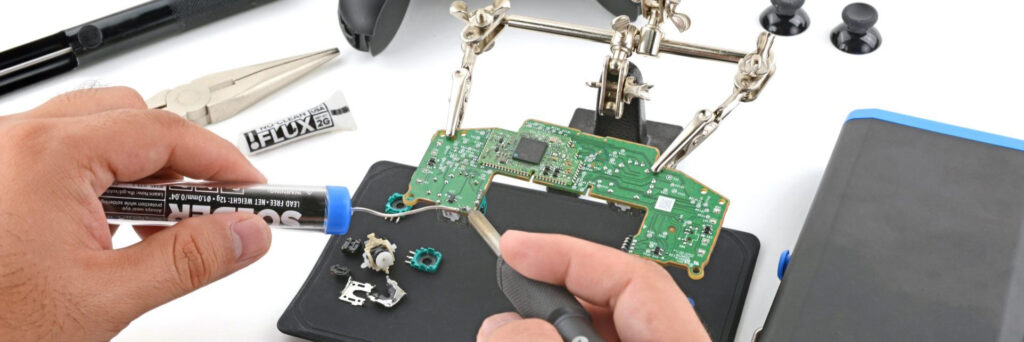
Green Flag
Looking for a store that meets the following criteria:
- Diagnose first, then make a commitment.
- Explain potential causes in plain, easy-to-understand language.
- Provide a written estimate.
- Obtain approval before proceeding with the estimated work.
- Offer a clear quality guarantee for the specific work performed.
- Advise you when a repair is not worth the cost.
- Maintain standardized procedures for receiving and returning items.
- Be honest regarding parts quality, data risks, and turnaround times.
- Be willing to say: “We do not perform this type of repair here.”
If your electronic device has suffered water damage, you need to find a shop that specializes in repairing this specific type of damage. Terms such as “microsoldering,” “board-level repair,” “data recovery,” and “liquid damage assessment” can serve as useful keywords to look for. However, do not set your expectations too high; neither data recovery nor liquid damage repair can be guaranteed to be successful.
Warning Signs
Please exercise extreme caution if you encounter the following situations:
- Provides a firm quote for complex issues without first inspecting the device.
- Recommends only the most expensive component replacement options.
- Does not explain the quality of parts used or the scope of the warranty coverage.
- Does not provide a written estimate.
- Pressures you to make an immediate decision.
- Guarantees successful data recovery.
- Becomes defensive when asked standard questions.
- Has received multiple reviews citing unexpected charges or poor communication.
A diagnostic fee in itself does not necessarily indicate a problem. Professional troubleshooting takes time. You simply need to ensure you understand when the fee is charged, whether it applies toward the cost of repairs, and what compensation—if any—you will receive should you decline the repairs.
Before handing it over
If possible, please back up your data. Remove any passwords or utilize a repair/privacy mode (if available). For mobile phones, laptops, tablets, and game consoles, please ask the shop whether they require your password—and why.
For home appliances and vehicles, please bring along the model number, serial number, error codes, service records, photos, videos, and a clear description of the issue.
If a repair estimate seems excessively high, consider seeking a second opinion from another technician. If the device is vintage, rare, of sentimental value, or contains irreplaceable data, be sure to mention this upfront. A skilled technician understands the distinction between simply “getting the device working again” and “retrieving photos at any cost.”
The best question remains:
“If this were yours, what would you do?”
What you want is a store that gives you honest answers—even if the answer is, “I wouldn’t spend the money.”